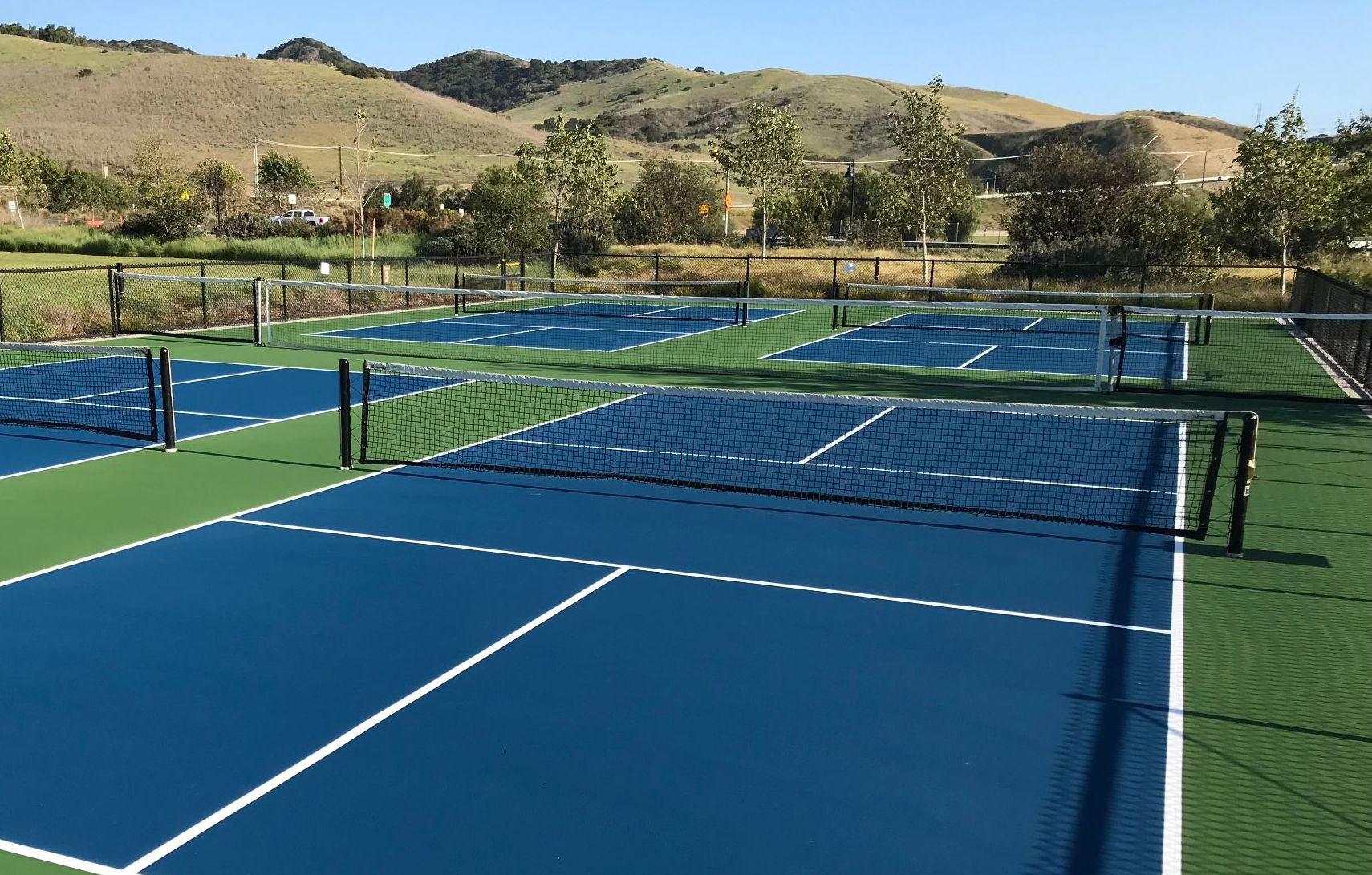
Pickleball court construction
Regulation 30 by 60 layouts and compact recreational sizes, textured acrylic or tile, wind-rated net posts and tournament striping.
Utah Sport Court Builder is a sport court builder in Highland, Utah that designs, installs and resurfaces pickleball courts, basketball courts and multi-sport backyard courts for homes and businesses. Our team installs sport courts across Highland, from the wide lots near Highland Glen Park to the newer streets off Alpine Highway and 11000 North.
Our Highland work covers the whole build: elevation survey, subgrade testing, geotextile separation, compacted aggregate base, reinforced or post-tensioned slab, then cushioned acrylic or modular polypropylene tile with laser-set striping. Request a free written quote and every one of those steps shows up as a line item.
Highland was platted with generous parcels, and that shows up in the courts we build here. Half-acre and larger yards let us set a court far enough from the house that noise and lighting never bother a bedroom window. It also means we can orient the pad for play instead of squeezing it against a property line. Most Highland courts end up running north to south, which keeps low sun out of a server's eyes.
Under the sod, much of Highland is a gravel and sand mix over deeper clay lenses. The upper material compacts well. The clay does not, and it swells when it takes on water. We probe to find where one ends and the other begins, then over-excavate to a depth that puts the slab on stable ground with woven geotextile separating the layers. Compaction gets tested before any concrete is ordered.
Irrigation is the quiet issue on Highland lots. Many properties still carry pressurized secondary lines and old flood-irrigation ditches from farm days. Those pipes love to run right where a court wants to go. We locate and reroute them during layout, and we tie court drainage away from the lines so a future leak never undermines the base.
Families here often want one pad that covers several sports, because the kids play everything. A 34 by 64 foot multi-sport court holds pickleball, a basketball key, and volleyball on cast-in sleeves without feeling crowded. We add conduit for lighting during the base stage even when lights come later, since trenching a finished court is money wasted. Highland City permits tall fencing and pole lighting, and we handle that paperwork for you.
Highland projects range from single-sport pickleball pads to large multi-sport courts with lighting, fencing and cast-in net sleeves.
Regulation 30 by 60 layouts and compact recreational sizes, textured acrylic or tile, wind-rated net posts and tournament striping.
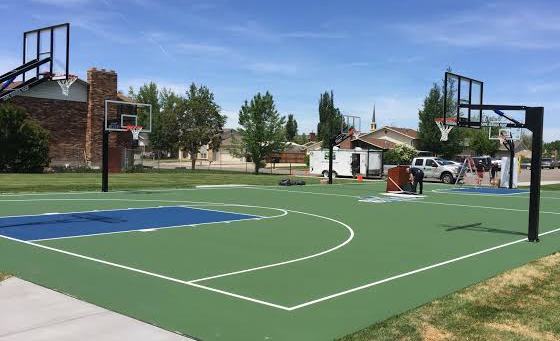
Half courts, full courts and driveway pads with adjustable goals on deep-set steel posts and scaled three-point arcs.
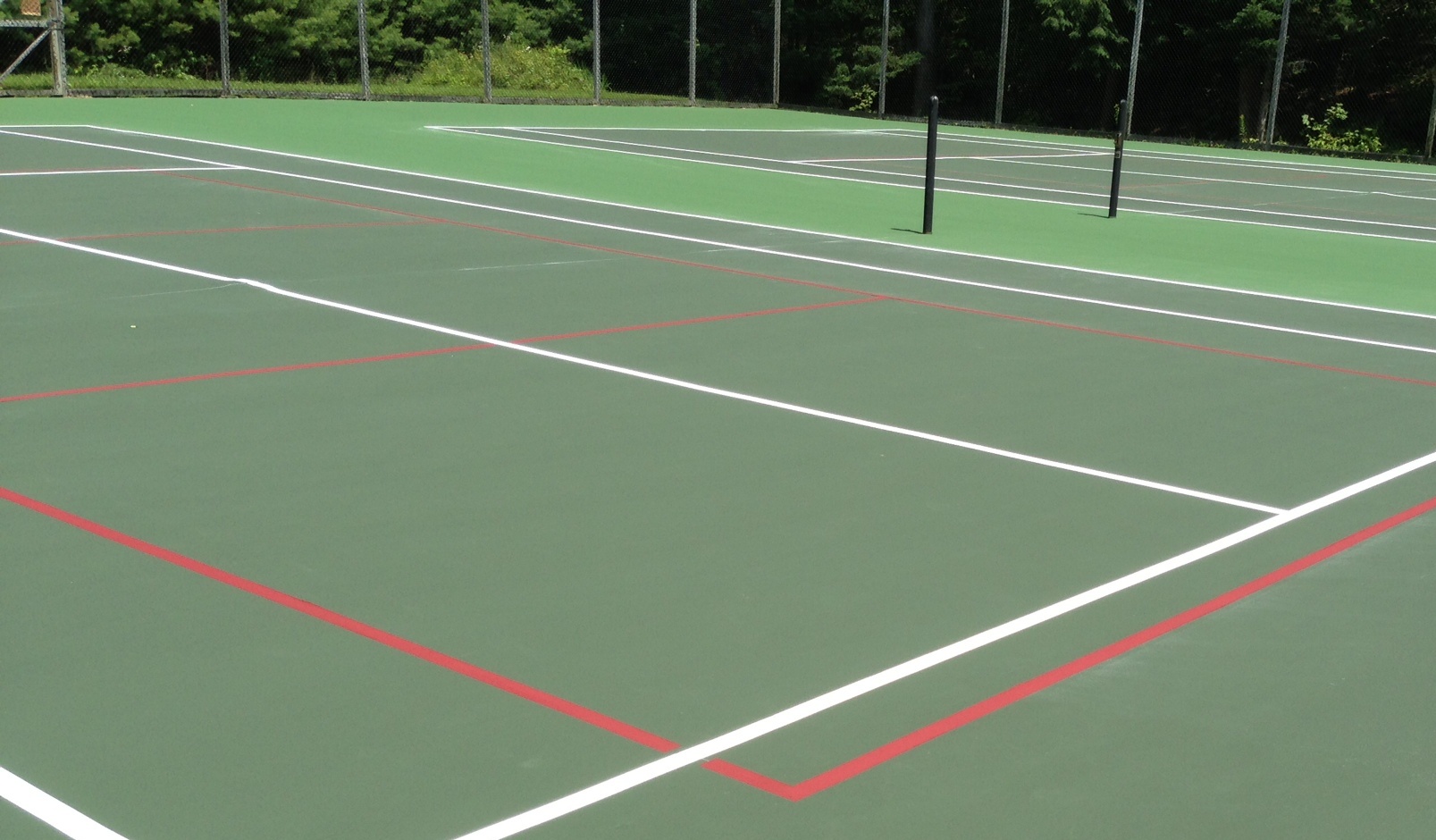
Regulation 60 by 120 pads, post-tensioned or reinforced slabs, acrylic color systems and deep-set net posts with wind reels.
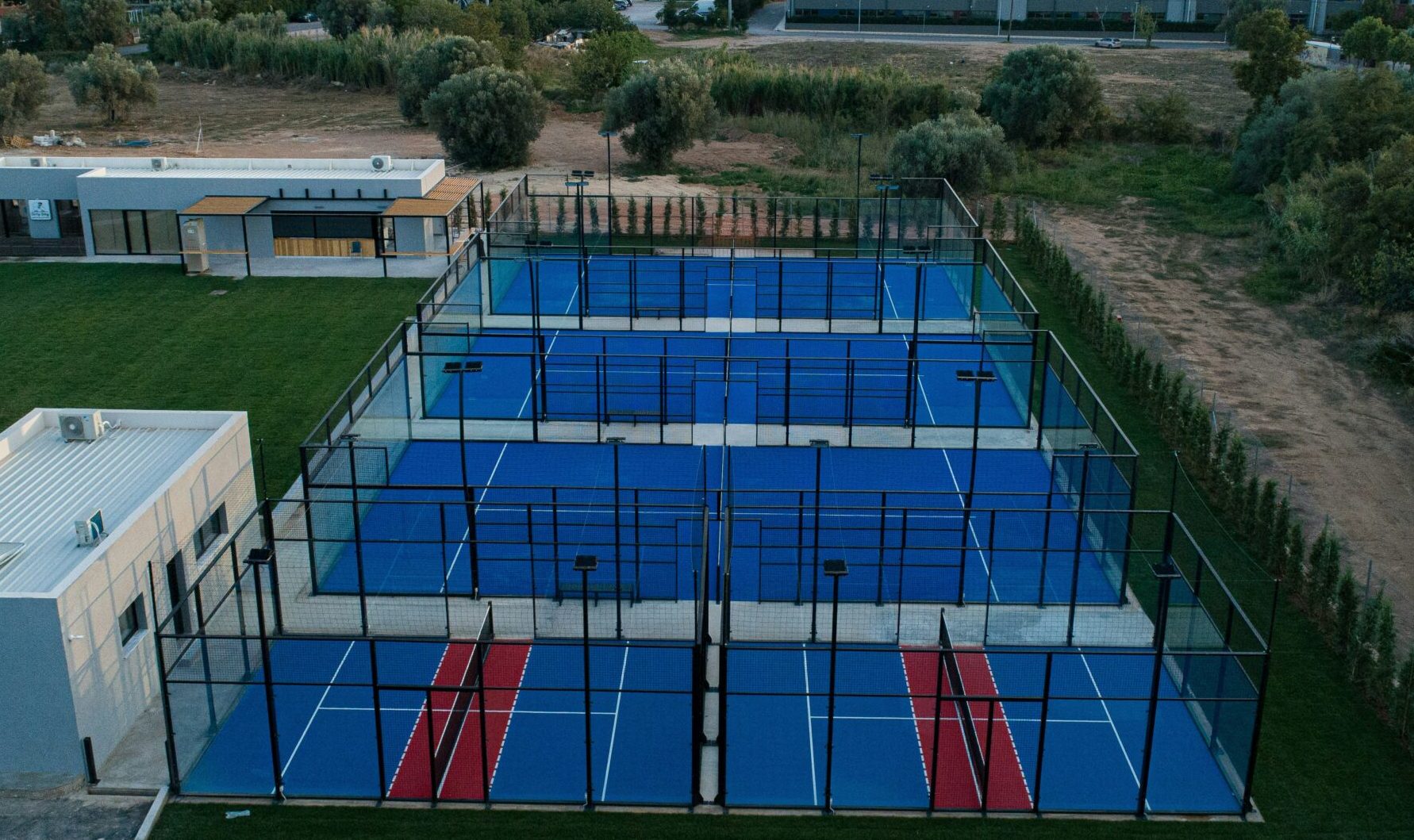
Regulation 20 by 10 meter enclosures with tempered glass walls, galvanized steel framing and sand-dressed turf on a dead-flat slab.
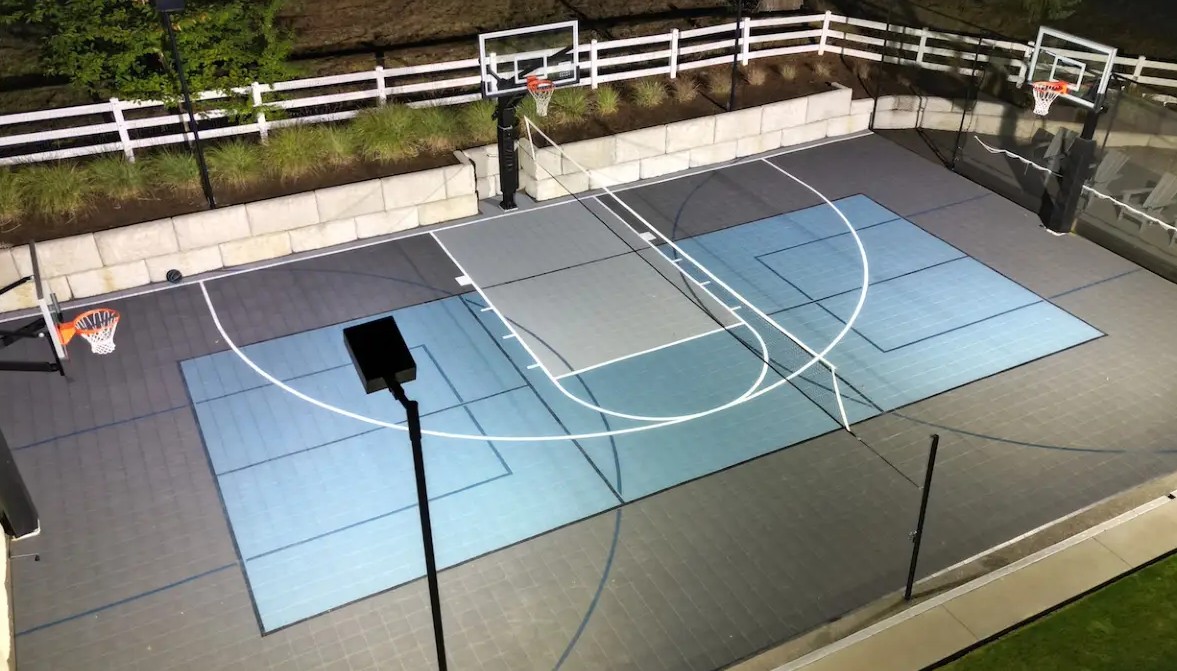
One pad striped for pickleball, basketball, volleyball and futsal, with flush cast-in sleeves for removable nets.
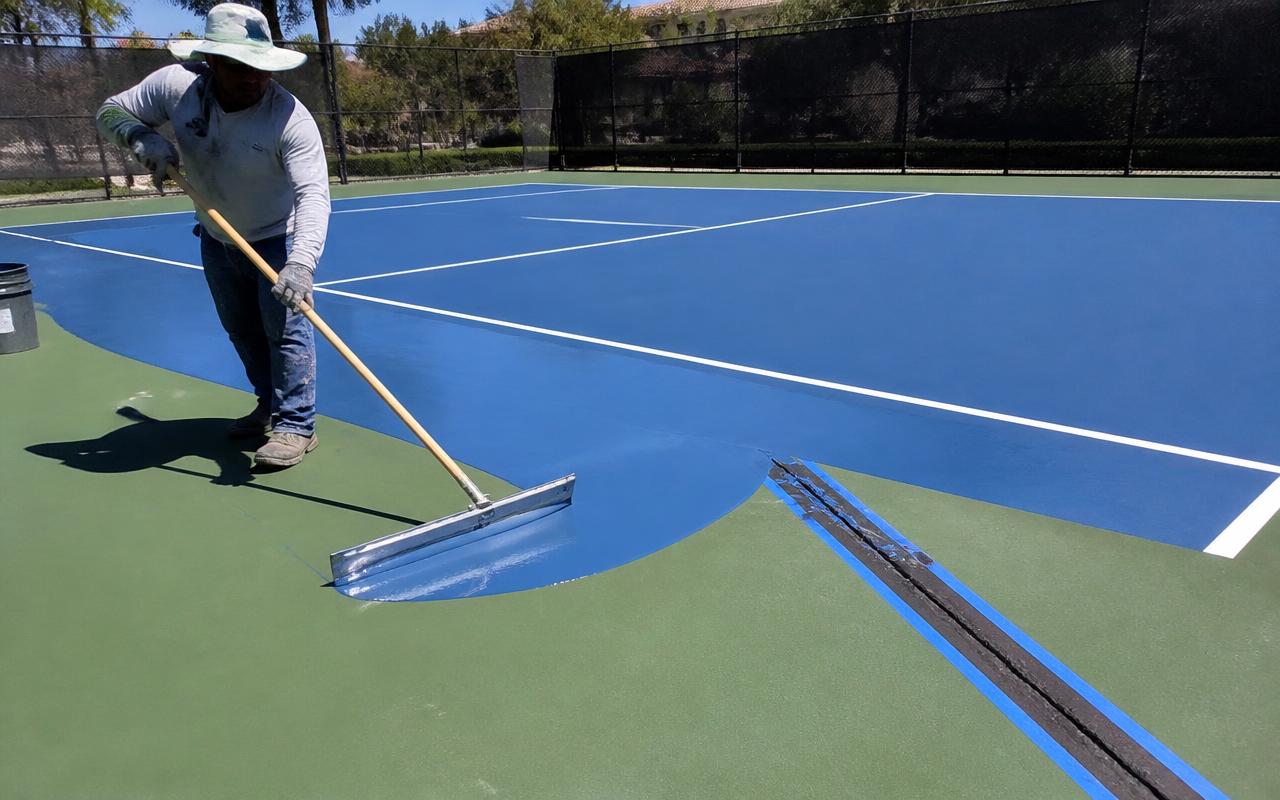
Crack routing, polymer patching, birdbath leveling, new acrylic color coats and fresh laser-set lines.
We orient and place the court for real play, not just wherever the lawn is flattest.
Secondary lines and old ditches located and rerouted before the excavator moves.
Conduit and sleeves go in during base work so lights and nets can be added anytime.
Highland's half-acre and larger lots off Alpine Highway commonly hold a 34 by 64 multi-sport pad, and some fit a full tennis footprint. We stake options in your yard so you can walk them before deciding.
Fencing is reviewed against accessory-structure rules, and ten-foot court fence often needs specific approval. We submit the plan with the fence detail rather than building first and asking later.
Highland courts typically fall between $35,000 and $80,000. Larger lots let us build full-size pads, and the base and slab remain the biggest cost items on every quote.
Most Highland lots hold a full 30 by 60 foot pickleball pad or a 34 by 64 multi-sport court with room for safe run-off on all sides.
Only if it is ignored. We locate pressurized secondary lines and old flood ditches during layout, reroute what sits under the court, and drain away from them.
Yes, if conduit goes in during base work. We trench conduit and cast net sleeves on every Highland build so lighting and nets can be added without cutting the finished slab.
We probe to find where gravel gives way to clay, over-excavate, separate layers with woven geotextile, compact base in lifts, and test compaction before ordering concrete.