Pickleball Court Builder in Utah | Utah Sport Court Builder
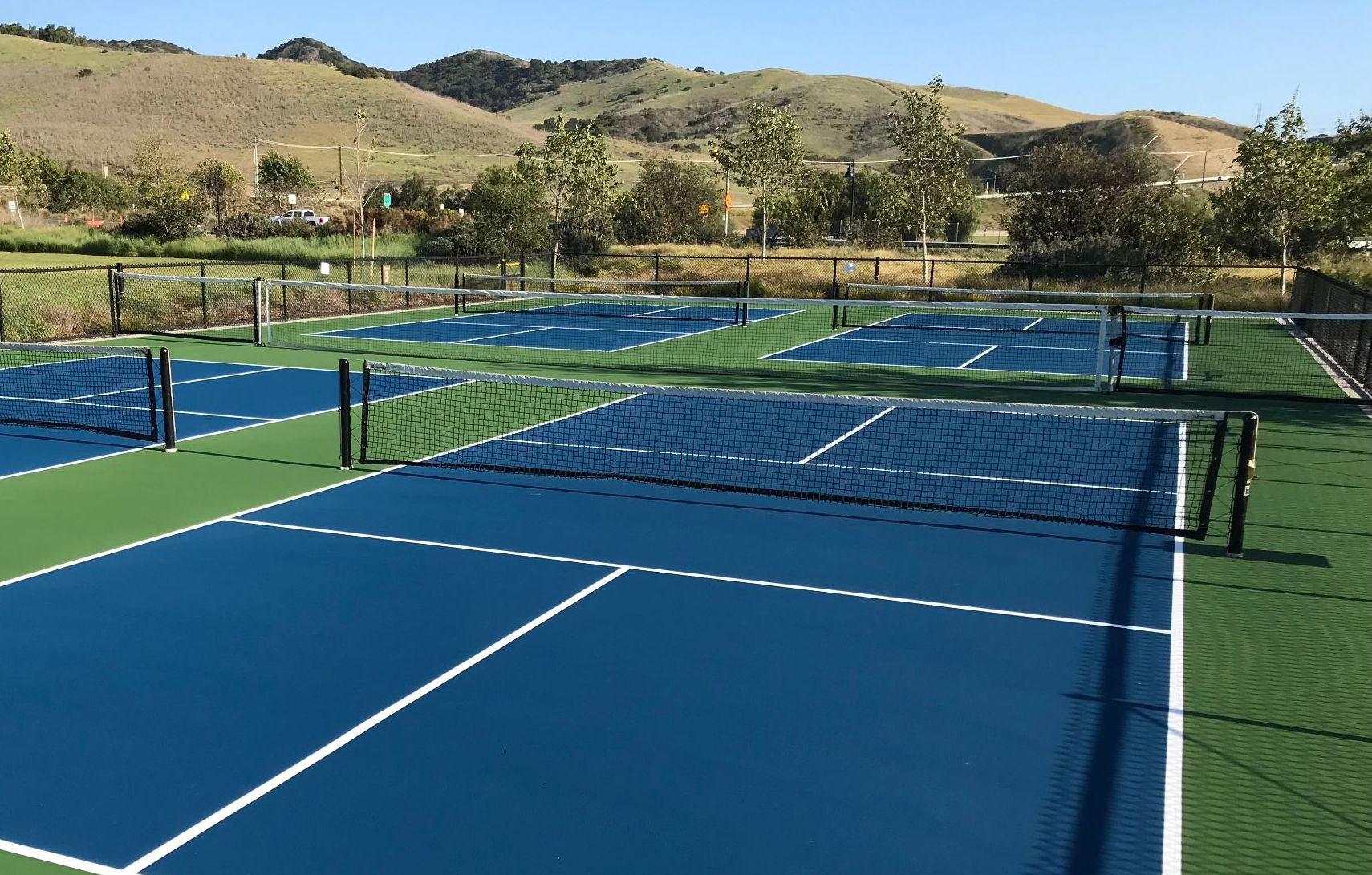
Utah Sport Court Builder builds residential and commercial pickleball courts across Utah County and Wasatch County. A pickleball court is a precise piece of construction: 30 by 60 feet of clear play area, a true one percent fall for drainage, and a surface texture that controls ball speed without chewing up shoes.
Every pickleball courts project we take on includes the same foundation work: survey and subgrade testing, geotextile separation, compacted aggregate base, reinforced concrete and a surface system matched to your yard. Ask for a free written quote and you will see each of those as a line item.
What is included
- Free site visit, elevation shoot and subgrade probe
- Engineered base and drainage plan for your soil
- Reinforced, fiber-reinforced or post-tensioned slab
- Cushioned acrylic or modular polypropylene tile
- Laser-set striping, net posts, goals, fencing, LED lighting
- 8-year surface and workmanship warranty
Court dimensions and fencing that actually fit your yard
The playing area is 20 by 44 feet, and 30 by 60 gives players safe run-off room at the baselines. When a yard cannot hold that, we design a 26 by 52 recreational layout or a shared pad with basketball. Fencing is usually 8 to 10 feet of black vinyl-coated chain link at the ends with breathable 70 percent windscreen, which stops balls without turning the court into a sail.
Cushioned acrylic versus modular tile
Cushioned acrylic gives the truest bounce and the crispest lines: a 100% acrylic resurfacer, two to five cushion layers, then silica-sand textured color coats. Modular polypropylene tile drains instantly, tolerates freeze and thaw, and is the better choice in shaded or wet yards. We walk you through both with real pricing rather than pushing one product.
Sound, lighting and neighbors
Paddle noise carries. We place courts away from bedroom windows where possible, use acoustic-rated windscreen on the closest side, and choose shielded 5000K LED optics on 18 to 20 foot poles so light lands on the court and not next door. In cities that review lighting, we submit photometrics with the permit.
Frequently asked questions about pickleball courts in Utah
Do I need a permit to build a pickleball court in Utah County?
Most Utah County cities treat a court pad as a flatwork or accessory structure permit, and fencing or lighting can need its own review. Cities like Provo, Orem, Lehi and Highland each read setbacks a little differently, so we pull the zoning sheet for your parcel and handle the submittal.
Will my HOA in Utah County approve a backyard pickleball court?
Usually yes, with a plan set. Newer HOAs in Saratoga Springs, Eagle Mountain and Vineyard often ask about fence height, light spill and noise. We give you a site plan, color selections and fixture cut sheets in the format most Utah County boards want to see.
How much does it cost to build a pickleball court in Utah?
Most residential pickleball courts in Utah County run about $35,000 to $70,000. Price depends on how much dirt has to move, whether you need a retaining wall, and whether you pick textured acrylic or modular tile. Fencing and lights add to that.
What size is a backyard pickleball court?
The lines measure 20 by 44 feet. A comfortable court needs 30 by 60 feet of clear space so players have safe run-off room. When a yard is tight, we build a 26 by 52 foot recreational court instead.
How long does it take to build a pickleball court?
Plan on three to four weeks on site. About one week for excavation and compacted base, a slab pour with a controlled cure, then surfacing once moisture readings allow the acrylic to bond.
Is acrylic or modular tile better for a pickleball court?
Acrylic gives the truest bounce and the crispest lines, so most players prefer it. Modular polypropylene tile drains right away and handles freeze and thaw better, which makes it the smarter pick for shaded or wet yards.
Can you build a pickleball court on my existing concrete slab?
Often yes. If the slab drains, is stable, and only shows surface cracking, we clean it, fill cracks, level low spots and coat it. If the slab has settled or moved, coating it only hides the problem for a season.
How do you keep pickleball noise from bothering neighbors?
We place the court away from bedroom windows when the lot allows, add acoustic-rated windscreen on the closest side, and aim shielded LED optics down at the court so light and sound stay on your property.