Padel Court Builder in Utah | Utah Sport Court Builder
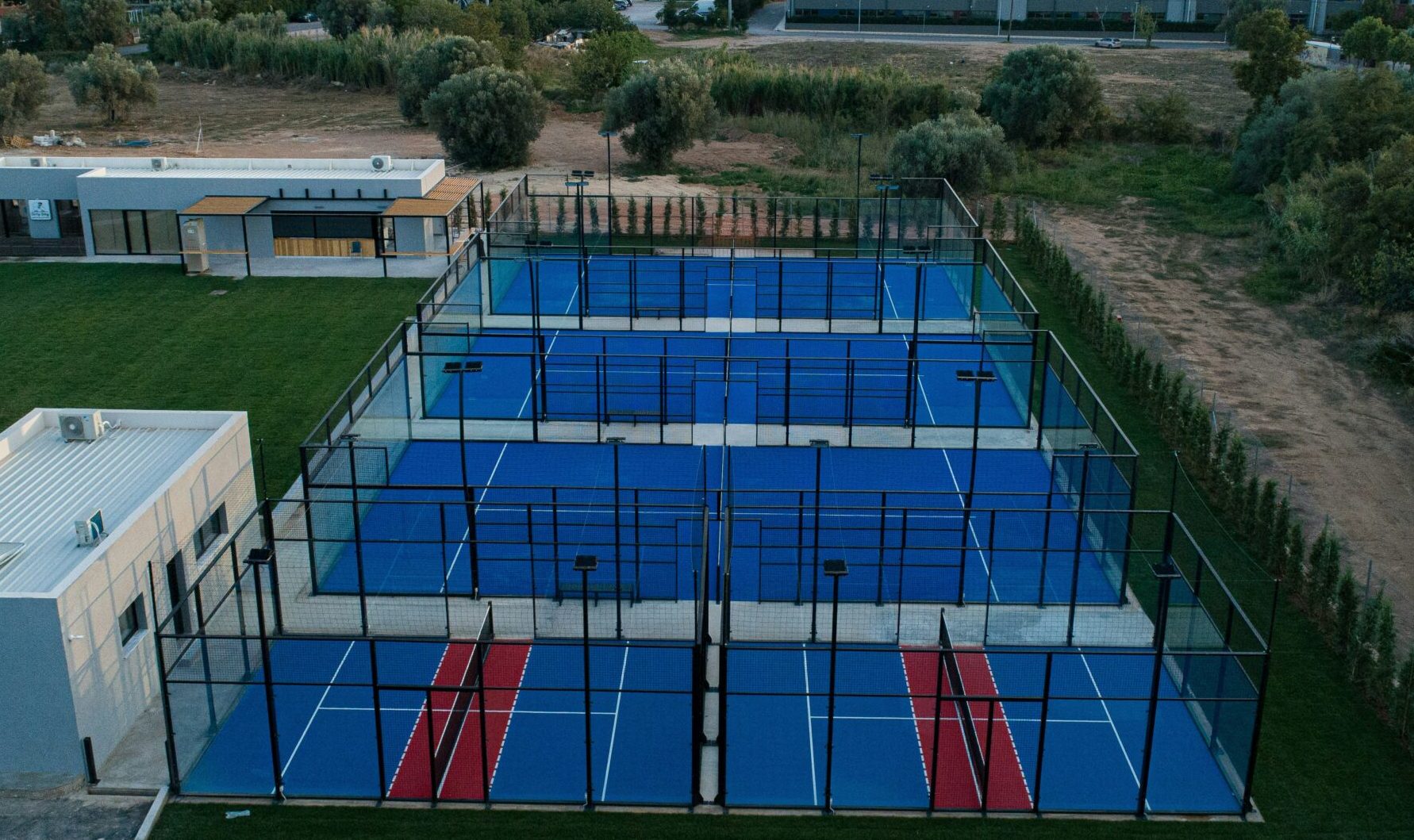
Utah Sport Court Builder builds regulation padel courts for homes, clubs and commercial facilities across Utah County and Wasatch County. Padel is the most structural court we build: a 20 by 10 meter pad, a fully enclosed frame of galvanized steel and 10 millimeter tempered glass, and an artificial turf surface dressed with silica sand.
Every padel courts project we take on includes the same foundation work: survey and subgrade testing, geotextile separation, compacted aggregate base, reinforced concrete and a surface system matched to your yard. Ask for a free written quote and you will see each of those as a line item.
What is included
- Free site visit, elevation shoot and subgrade probe
- Engineered base and drainage plan for your soil
- Reinforced, fiber-reinforced or post-tensioned slab
- Cushioned acrylic or modular polypropylene tile
- Laser-set striping, net posts, goals, fencing, LED lighting
- 8-year surface and workmanship warranty
Court dimensions, enclosure and clearances
A regulation padel court measures 20 by 10 meters, roughly 66 by 33 feet, with walls 3 meters tall at the back and 4 meters at the corner posts. Because the enclosure is part of the playing surface, the slab has to run dead flat and square within a few millimeters. We stake the footprint plus working clearance, usually about 70 by 40 feet, before pricing anything.
Slab, footings and steel structure
Padel loads concentrate at the post footings, so we pour a reinforced or fiber-reinforced slab with thickened pads under every column and cast anchor bolts to a survey template. The frame is hot-dip galvanized steel, and the panels are 10 millimeter tempered safety glass set in gasketed clamps with welded mesh above the sides. Every joint is torqued and the frame is laser-checked for plumb before turf goes down.
Turf, sand infill and lighting
The playing surface is monofilament or textured artificial turf glued at the seams and dressed with silica sand infill, which sets pace and footing and keeps the surface stable through freeze and thaw. Sand levels get topped up as part of normal maintenance. Lighting runs on eight to twelve shielded LED fixtures mounted to the frame or on poles outside it, aimed to eliminate glare off the glass.
Frequently asked questions about padel courts in Utah
Are padel courts allowed in Utah County backyards?
The court itself is normally fine, but the 10 to 13 foot glass and mesh enclosure reads as a structure in most Utah County zoning codes, so setbacks and height limits matter. We check your city's accessory-structure rules before we price the enclosure.
How does Utah weather affect a padel court?
Tempered glass and hot-dip galvanized steel handle Utah's freeze and thaw well, and the sand-filled turf drains fast after a storm. We slope the slab for runoff and pick infill that stays stable through hot Utah County summers.
How much does it cost to build a padel court in Utah?
Most padel courts in Utah County run about $60,000 to $110,000. The glass walls and steel structure are the biggest line items, followed by the slab and base. Lighting and turf choice move the number up or down.
What size is a padel court?
A regulation padel court is 20 by 10 meters, or about 66 by 33 feet, fully enclosed by glass and mesh. Walls are 10 to 13 feet tall, so plan for a footprint a little larger than the court for footings and access.
Is padel the same as pickleball or tennis?
No. Padel is played inside an enclosure with glass back walls, so the ball stays in play off the walls. It uses solid paddles, an artificial turf surface with sand infill, and an underhand serve.
What surface goes on a padel court?
Padel uses monofilament or textured artificial turf over a concrete slab, dressed with silica sand infill. The sand controls pace and footing. It is not an acrylic-coated surface like tennis or pickleball.
How long does it take to build a padel court?
Plan on four to six weeks. Excavation, base and slab take the first stretch, the slab cures, then the steel and tempered glass enclosure goes up before turf and infill are installed.
Can a padel court be built in a backyard?
Yes, if the lot can hold roughly 70 by 40 feet of level space with room to work around it. We stake the footprint on site first so you can see exactly how it lands before anything is priced.