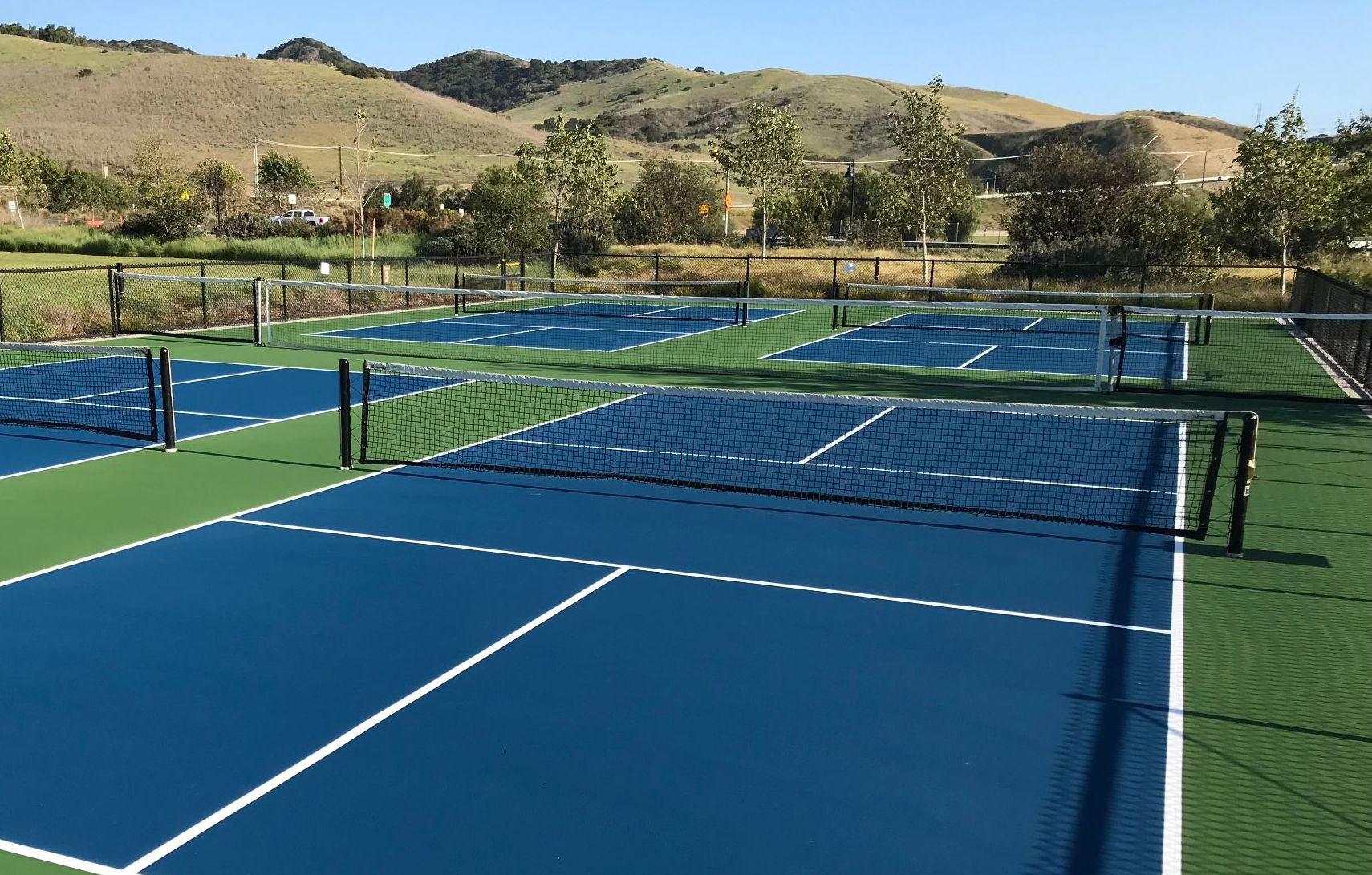
Pickleball court construction
Regulation 30 by 60 layouts and compact recreational sizes, textured acrylic or tile, wind-rated net posts and tournament striping.
Utah Sport Court Builder is a sport court builder in Park City, Utah that designs, installs and resurfaces pickleball courts, basketball courts and multi-sport backyard courts for homes and businesses. Our team builds mountain-ready sport courts in Park City, serving neighborhoods from Old Town and Prospector to Silver Springs, Jeremy Ranch and the Kimball Junction area in Summit County.
Our Park City work covers the whole build: elevation survey, subgrade testing, geotextile separation, compacted aggregate base, reinforced or post-tensioned slab, then cushioned acrylic or modular polypropylene tile with laser-set striping. Request a free written quote and every one of those steps shows up as a line item.
Park City sits above 6,900 feet, and altitude changes everything about court construction. The freeze and thaw cycle here is brutal, snow load is real, and the building season is short. We plan mountain projects for a late spring start so excavation, base and concrete are finished well before the first hard frost, then coat the surface while daytime temperatures still hold above 55 degrees.
Frost depth in Summit County is far deeper than in the valley, so footings for fence posts, hoop poles and light standards go deeper than a Provo build. Base sections are thicker and always free-draining, because trapped water that freezes under a slab will lift it. On steep lots we key the pad into the hillside and use engineered retaining walls rated for the load above.
Snow storage is the question most builders forget to ask. A court that becomes a snow dump in December will show damage by April. We plan a clear push zone, avoid sharp edge details that a plow blade can catch, and generally recommend modular tile, which tolerates cold and moves with the surface instead of fighting it.
Park City is roughly an hour from our Provo shop over the Heber route, so mountain jobs are scheduled in continuous blocks with the crew on site all week. Summit County and Park City each have their own design review rules, especially for lighting and fencing near open space, and we prepare submittals that speak their language.
Park City courts are built for altitude: deep frost footings, free-draining base, cold-tolerant tile surfaces and snow-smart edge details.
Regulation 30 by 60 layouts and compact recreational sizes, textured acrylic or tile, wind-rated net posts and tournament striping.
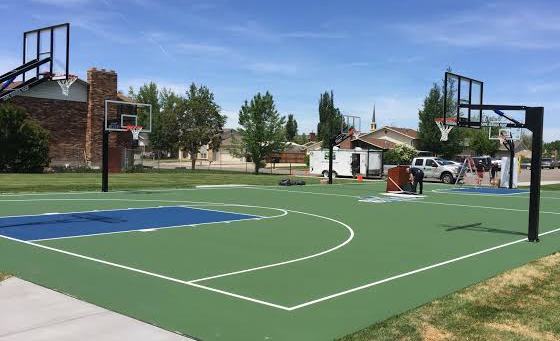
Half courts, full courts and driveway pads with adjustable goals on deep-set steel posts and scaled three-point arcs.
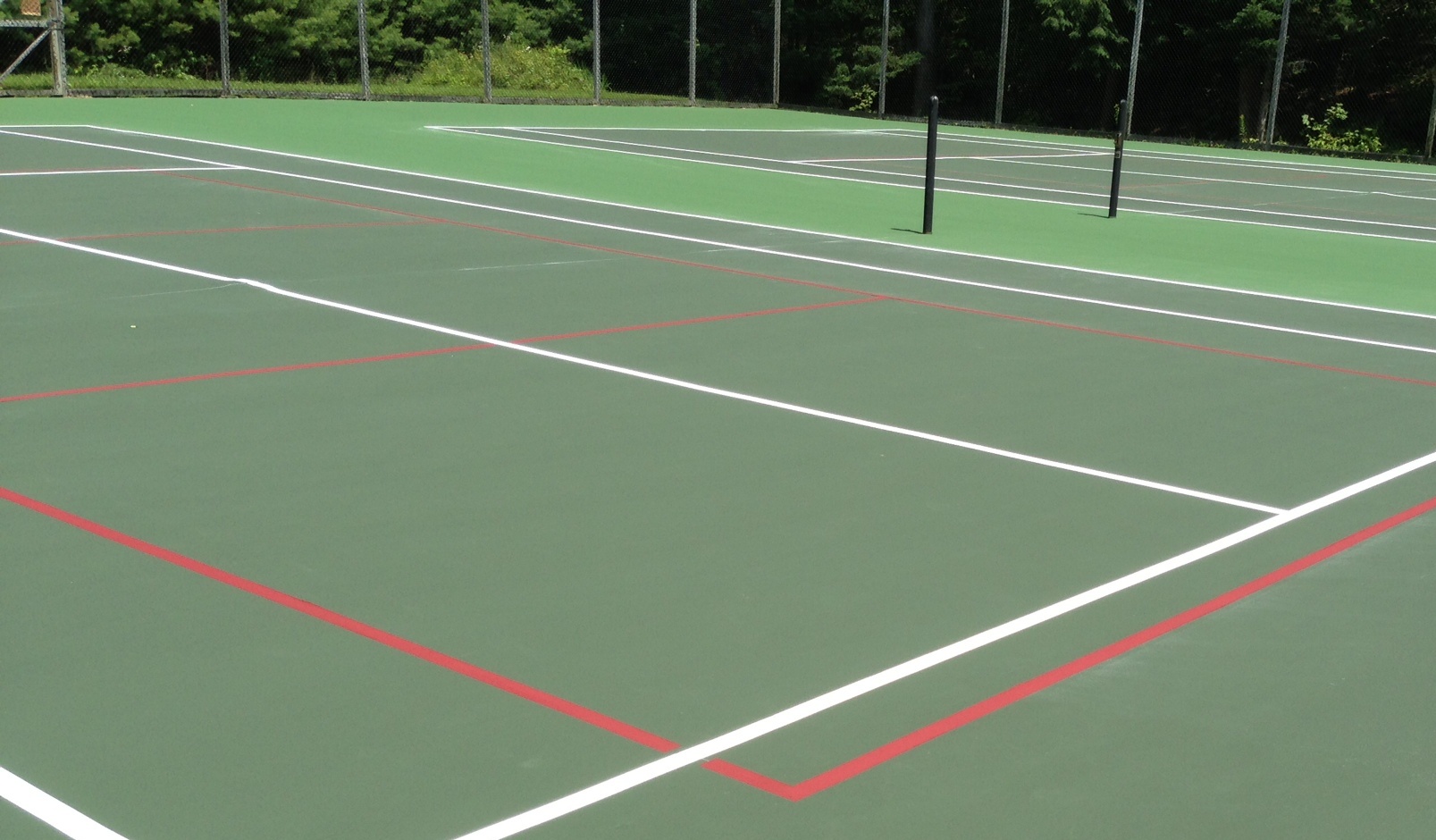
Regulation 60 by 120 pads, post-tensioned or reinforced slabs, acrylic color systems and deep-set net posts with wind reels.
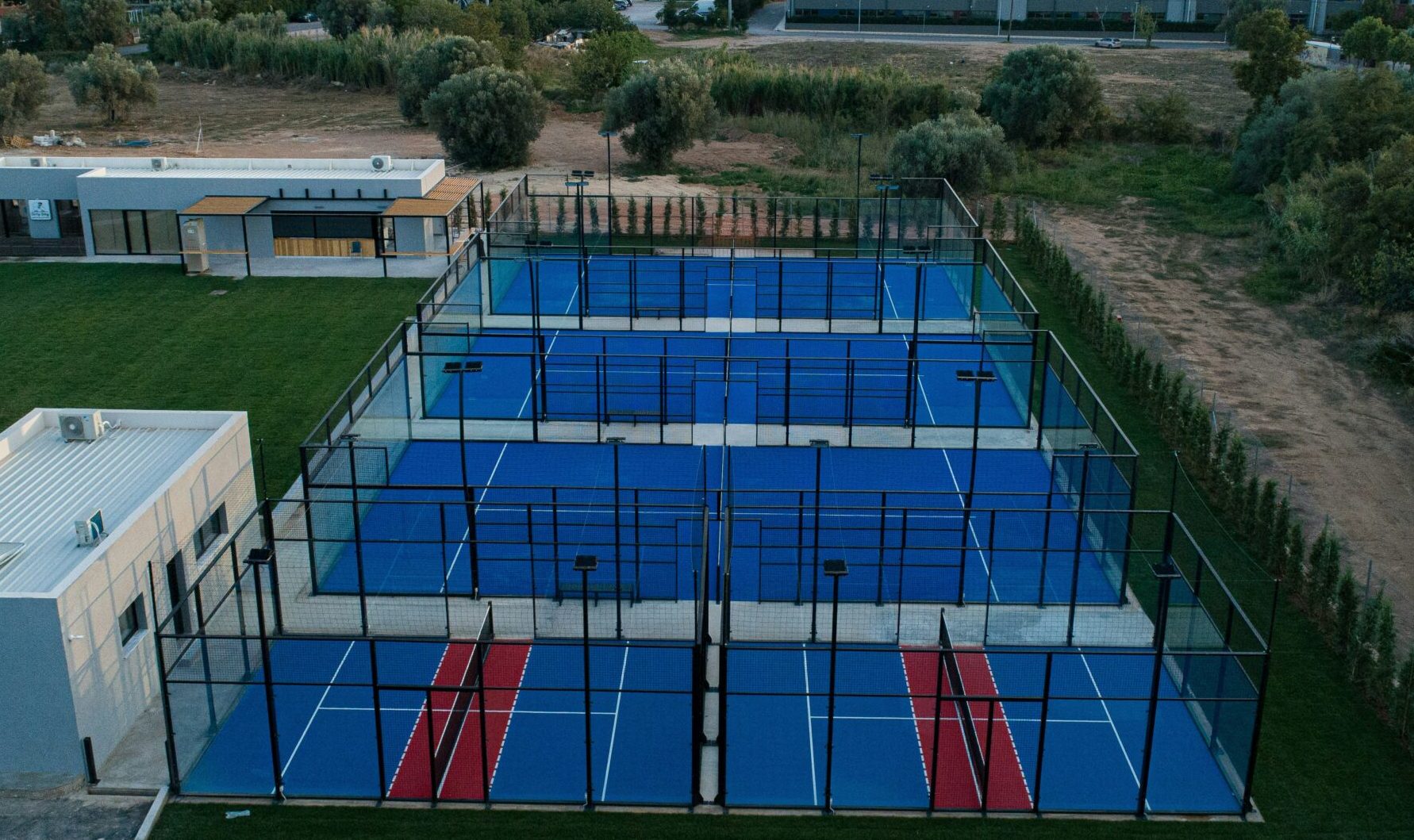
Regulation 20 by 10 meter enclosures with tempered glass walls, galvanized steel framing and sand-dressed turf on a dead-flat slab.
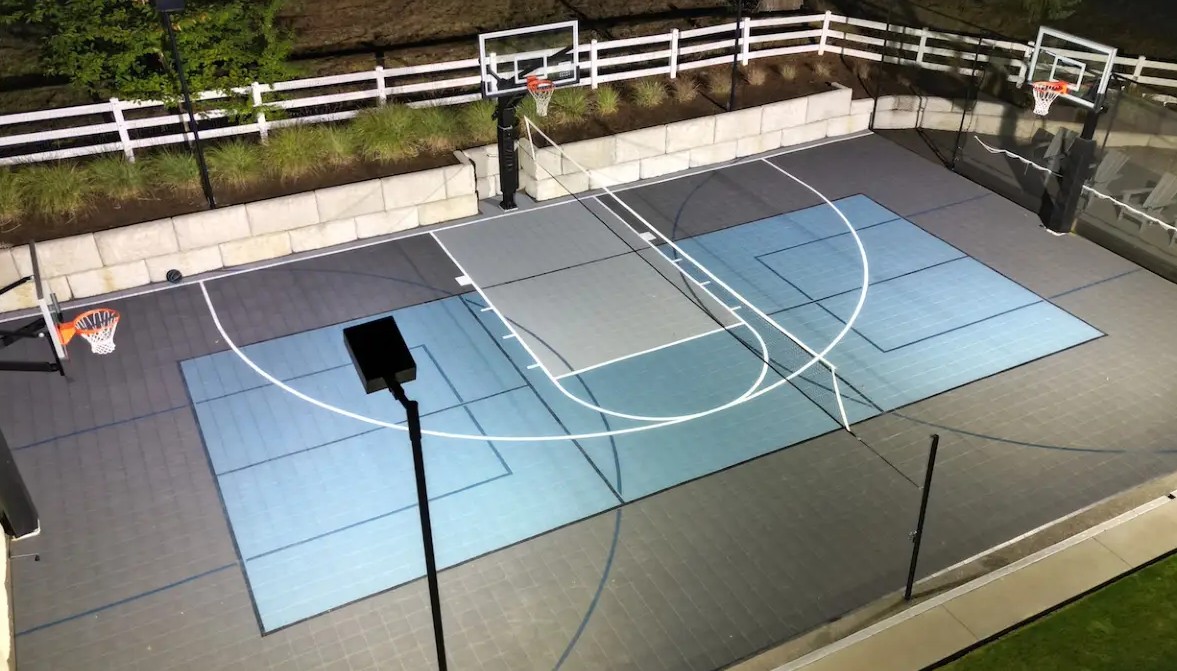
One pad striped for pickleball, basketball, volleyball and futsal, with flush cast-in sleeves for removable nets.
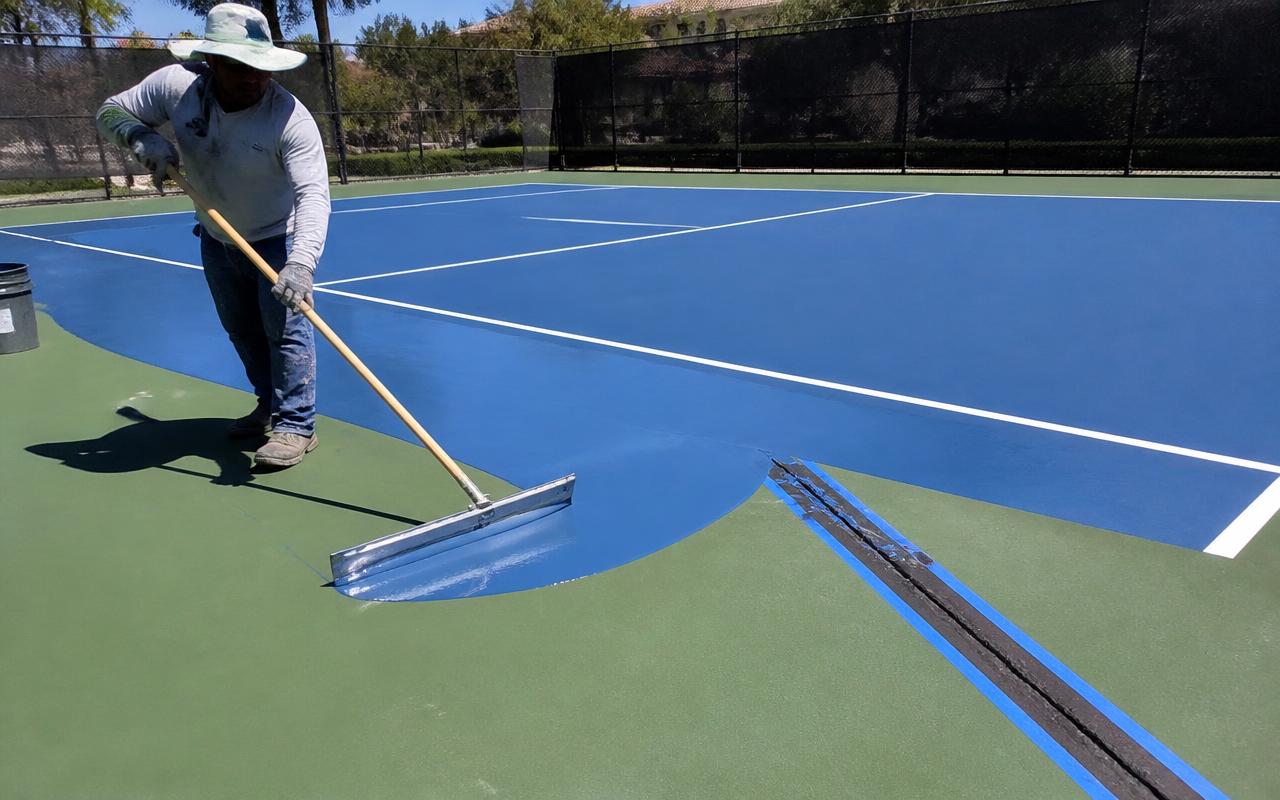
Crack routing, polymer patching, birdbath leveling, new acrylic color coats and fresh laser-set lines.
Deep footings and free-draining base built for real Summit County frost.
Continuous crew blocks so the pour and the coating both land in the weather window.
Edge details and surfaces chosen for yards that get plowed all winter.
Hard freeze cycles and deep snow load shorten the season sharply. We get excavation, base and slab done in summer and finish coatings well before the first storms so nothing cures in the cold.
Modular polypropylene tile is the usual answer up here. It drains, tolerates freeze and thaw, and can be cleared after a storm without damaging an acrylic coating.
Park City projects usually start around $45,000 and can pass $110,000. Steep terrain, tougher access and cold-weather detailing all add work compared with a valley build.
Modular polypropylene tile. It drains instantly, handles heavy freeze and thaw, and can be installed in cooler weather when acrylic coatings would never cure properly.
Yes, with engineering. We cut a level bench, use deep or stepped footings, hold the downhill side with a wall, and manage snowmelt with drains around the pad.
Excavation and concrete run through the warm months, and tile can go down later in the fall. Acrylic surfacing needs a dry window above 50 degrees, so we plan it for midsummer.