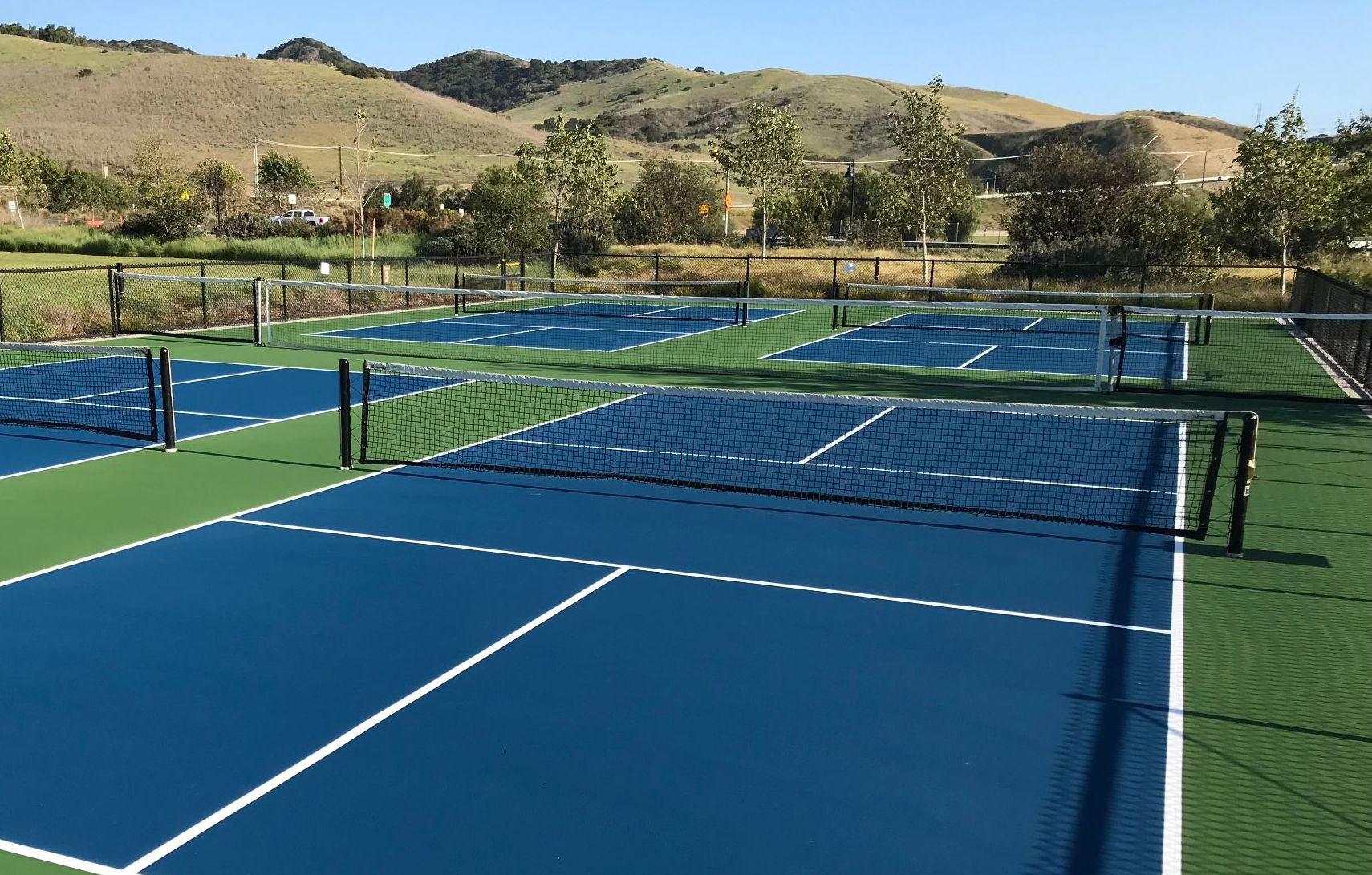
Pickleball court construction
Regulation 30 by 60 layouts and compact recreational sizes, textured acrylic or tile, wind-rated net posts and tournament striping.
Utah Sport Court Builder is a sport court builder in Saratoga Springs, Utah that designs, installs and resurfaces pickleball courts, basketball courts and multi-sport backyard courts for homes and businesses. Our team builds courts throughout Saratoga Springs, from the lakeside neighborhoods along Redwood Road to the newer benches above Talus Ridge and Israel Canyon Road.
Our Saratoga Springs work covers the whole build: elevation survey, subgrade testing, geotextile separation, compacted aggregate base, reinforced or post-tensioned slab, then cushioned acrylic or modular polypropylene tile with laser-set striping. Request a free written quote and every one of those steps shows up as a line item.
Almost every home in Saratoga Springs is new, which means almost every backyard sits on engineered fill placed during development. Fill can be excellent or uneven depending on the phase and the builder. We probe the pad to find the depth of loose material, check for buried construction debris, and design the base around what we actually find rather than a generic spec sheet.
Yards near Utah Lake carry a higher water table and finer, wind-blown soil. There we raise the court slightly above surrounding grade, place a clean angular rock drainage layer, and run a perimeter drain to daylight or a dry well. Sloping the finished surface a true one percent means spring melt sheets off instead of sitting at the net line, which is what makes an old court slick.
Wind off the lake is the other design factor here, and it is stronger than most homeowners expect. We set fence posts deeper, choose 70 percent breathable windscreen instead of solid panels so the fence does not act like a sail, and place the tallest screen on the prevailing upwind side. Removable net systems drop into flush sleeves so nothing is left standing through a gusty week.
Lot lines in Saratoga Springs subdivisions are tight, so layout matters more than raw square footage. A 30 by 50 foot pad with dual-color striping gives you a pickleball court with a basketball key at one end and keeps safe clearance from fences and window wells. The city reviews setbacks, fence height and exterior lighting, and we submit the drawings and photometrics with the permit application.
Saratoga Springs builds focus on fill-aware base design, lake-wind fencing and tight-lot layouts that still play full size.
Regulation 30 by 60 layouts and compact recreational sizes, textured acrylic or tile, wind-rated net posts and tournament striping.
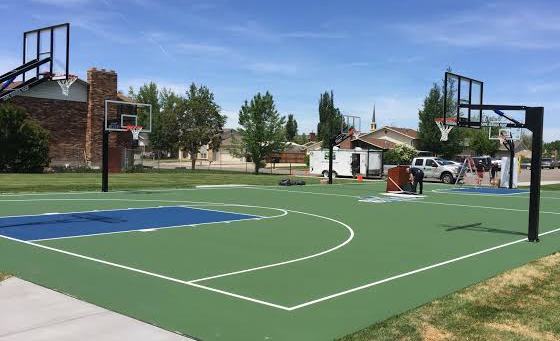
Half courts, full courts and driveway pads with adjustable goals on deep-set steel posts and scaled three-point arcs.
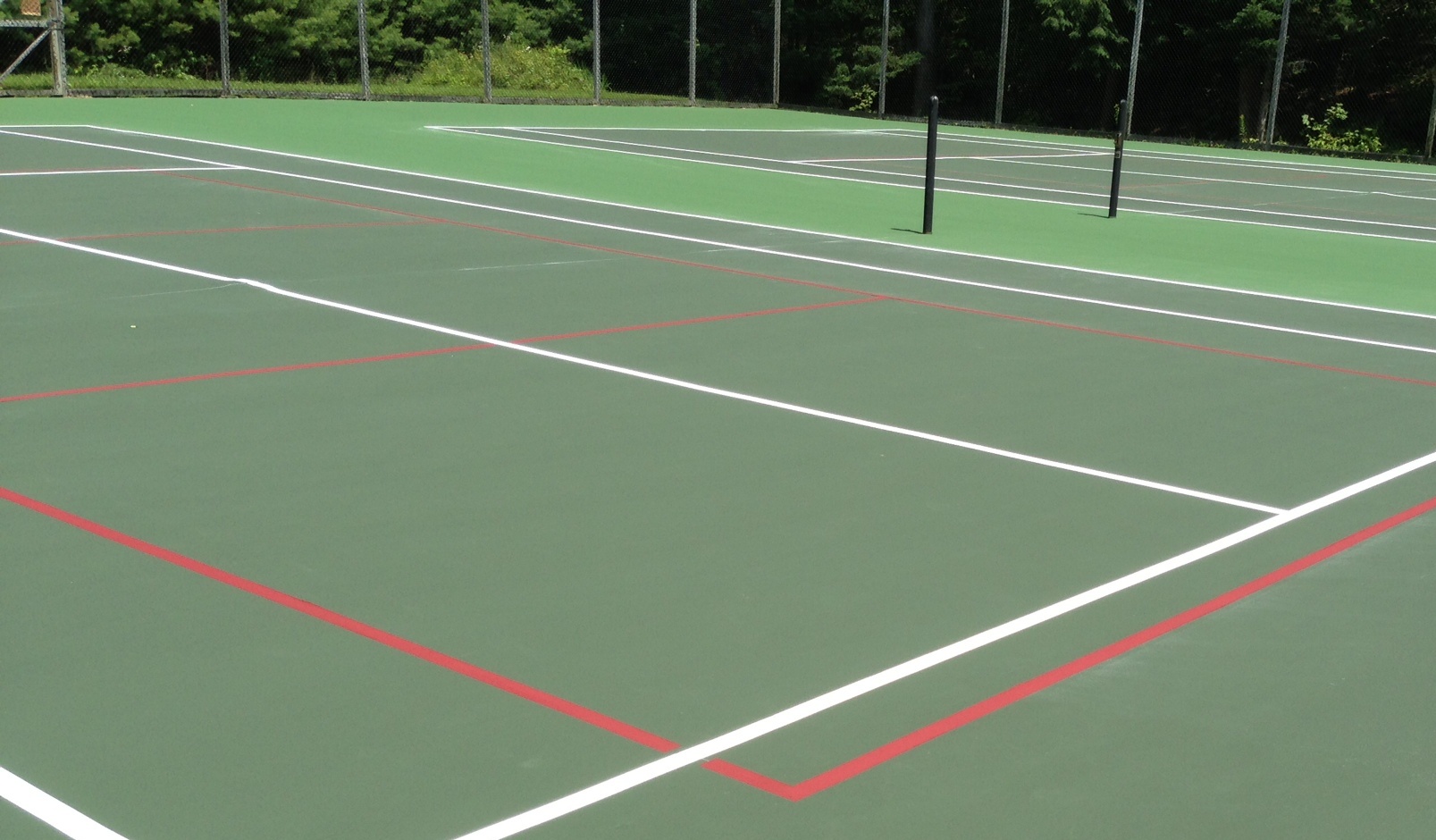
Regulation 60 by 120 pads, post-tensioned or reinforced slabs, acrylic color systems and deep-set net posts with wind reels.
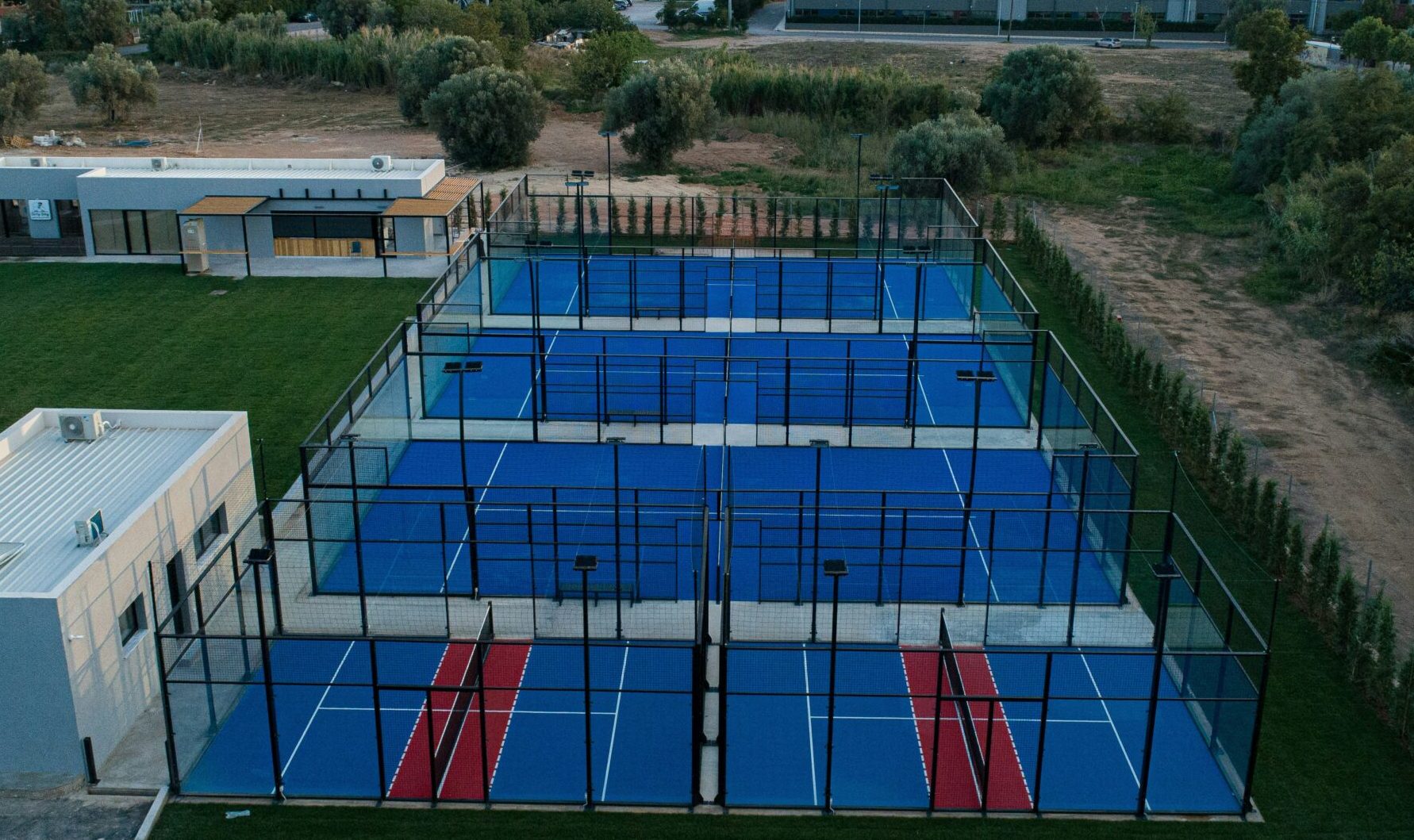
Regulation 20 by 10 meter enclosures with tempered glass walls, galvanized steel framing and sand-dressed turf on a dead-flat slab.
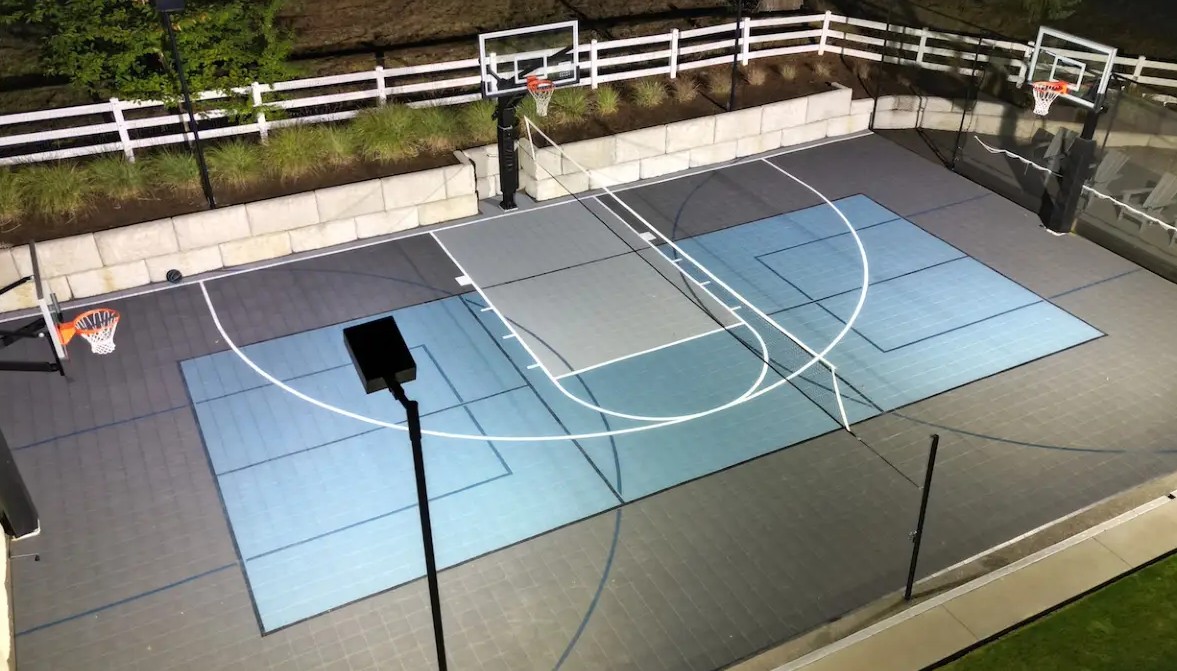
One pad striped for pickleball, basketball, volleyball and futsal, with flush cast-in sleeves for removable nets.
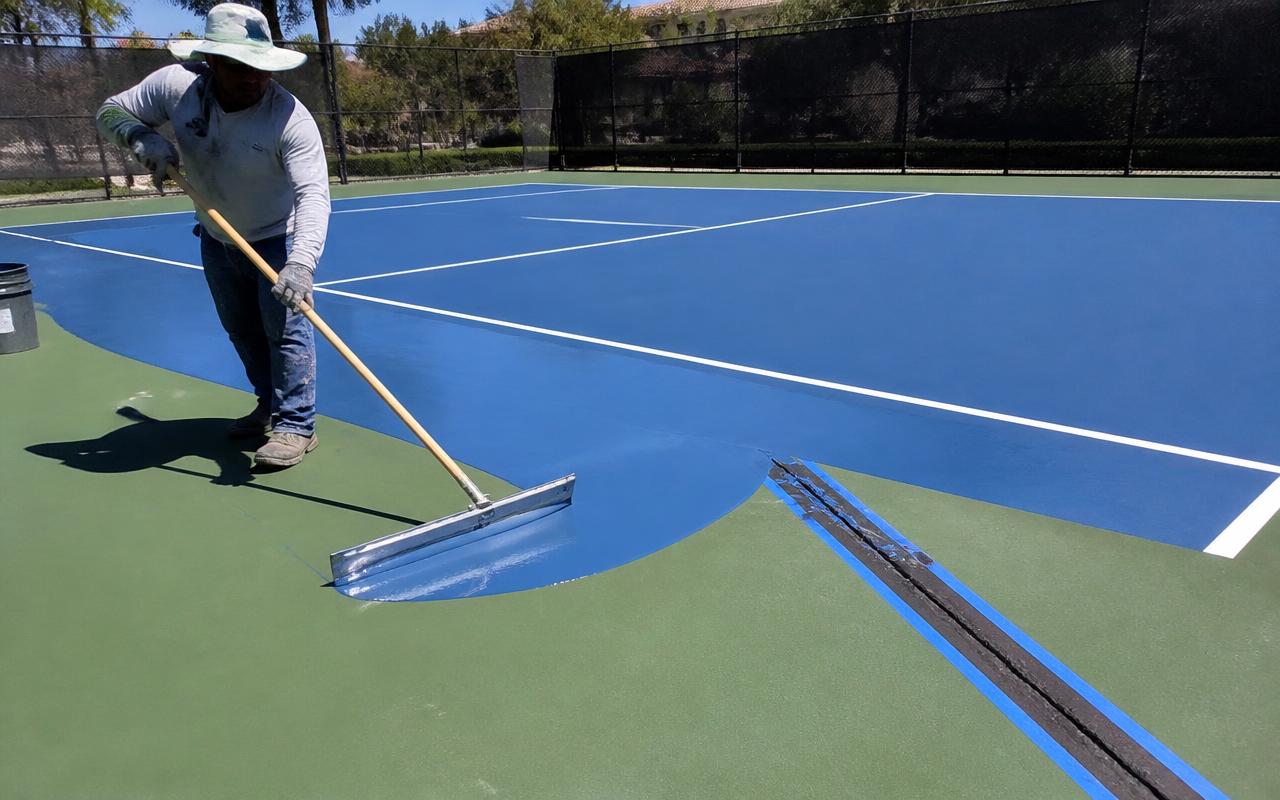
Crack routing, polymer patching, birdbath leveling, new acrylic color coats and fresh laser-set lines.
We probe every new-construction pad and design the structural section for it.
Deeper posts and breathable screen so lake gusts do not bend your enclosure.
Dual striping fits real play area inside modern setbacks.
Afternoon wind off the lake pushes pickleball and tennis balls around. We orient courts to cut the prevailing gusts and add windscreen on the exposed side, which makes play far more predictable.
Parts of the west side sit on sandy lake deposits with a higher water table. We check moisture, build extra base thickness where needed, and slope the slab so storm water never sits on the surface.
Expect roughly $35,000 to $75,000. Engineered-fill pads sometimes need extra base work, and lake-wind fencing adds cost compared with an inland court.
Not when it is tested. We probe for the depth of loose material and buried debris, then design the structural section for what we find instead of a generic spec.
Deeper fence posts, 70 percent breathable windscreen instead of solid panels, and the tallest screen on the upwind side so the fence does not act like a sail.
Sometimes. Where it does not, a 30 by 50 pad with dual-color striping gives a pickleball court plus a basketball key inside the setbacks.
We raise the pad above surrounding grade, place a clean angular rock drainage layer, and run a perimeter drain to daylight or a dry well.